Ltning
@ltning@weirdr.net
32 following, 88 followers
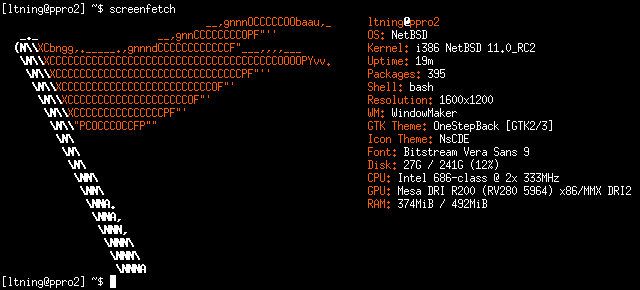
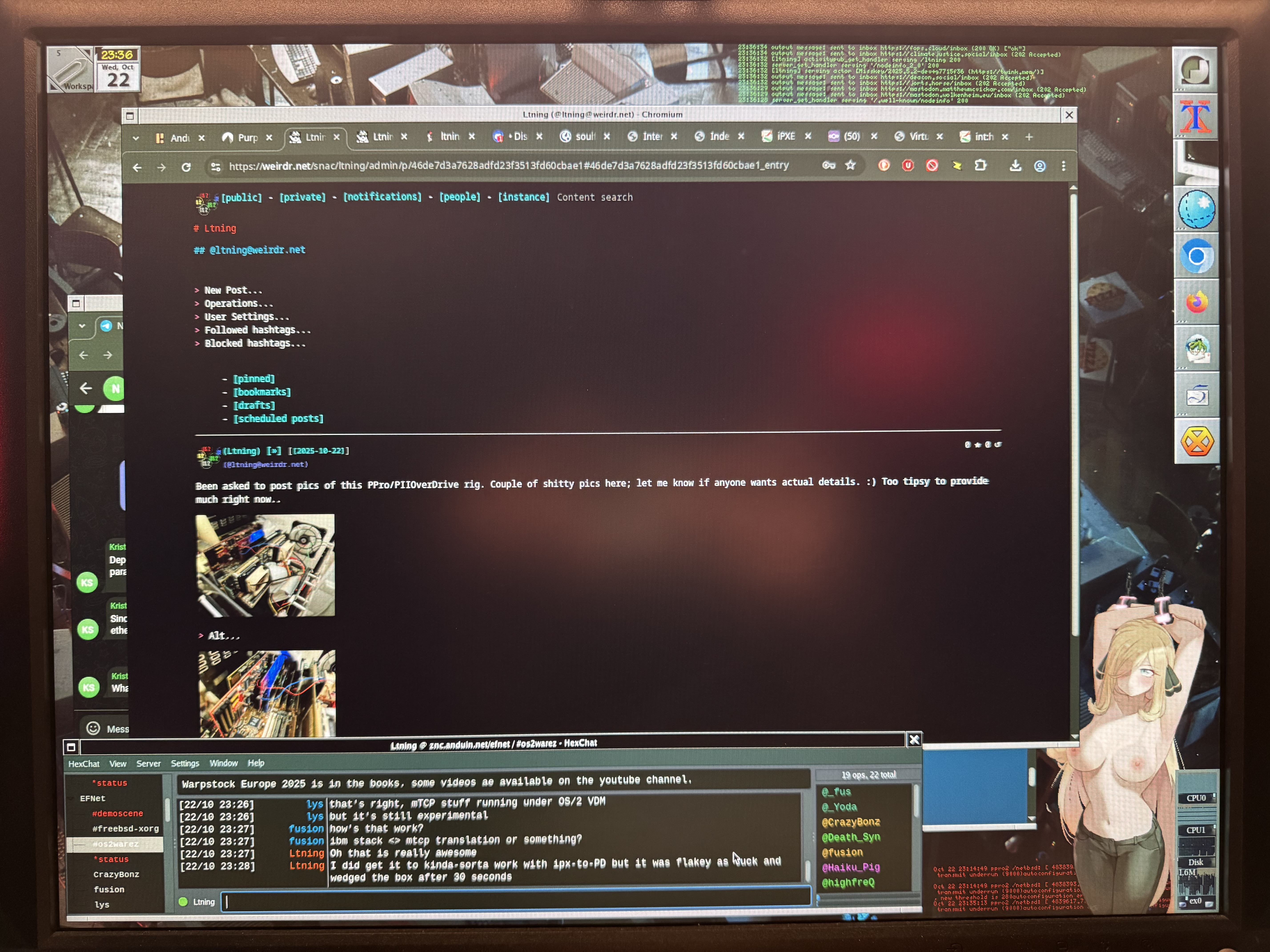
load averages: 7.70, 4.09, 2.66; up 0+00:41:42 21:55:40
74 processes: 3 runnable, 69 sleeping, 2 on CPU
CPU states: 28.4% user, 49.6% nice, 15.9% system, 4.6% interrupt, 1.3% idle
Memory: 241M Act, 120M Inact, 14M Wired, 57M Exec, 175M File, 5056K Free
Swap: 5120M Total, 45M Used, 5075M Free / Pools: 105M Used / Network: 67K In, 1035K OutPID USERNAME PRI NICE SIZE RES STATE TIME WCPU CPU COMMAND
686 root 17 10 59M 12M CPU/0 18:22 82.52% 82.52% snac
766 nginx 77 0 20M 8116K kqueue/0 0:51 31.15% 31.15% nginx
838 nginx 25 0 21M 8648K RUN/1 0:53 26.61% 26.61% nginx
734 root 76 0 72M 35M poll/0 5:19 22.22% 22.22% X
2528 root 73 10 29M 7124K wait/1 0:03 5.40% 4.00% pkg_add
1445 ltning 38 0 31M 12M RUN/1 0:57 3.76% 3.76% urxvt
3177 root 16 10 6144K 1228K RUN/1 0:00 13.17% 3.42% sh
3916 ltning 42 0 6748K 2456K CPU/1 0:01 2.45% 2.44% top
1332 ltning 85 0 7620K 2152K select/0 0:01 1.07% 1.07% xrootconsole
1103 ltning 85 0 42M 15M poll/1 0:52 0.93% 0.93% gkrellm
2342 root 77 10 29M 16M wait/0 1:09 0.68% 0.68% pkgin
1113 ltning 84 0 32M 11M select/1 0:50 0.59% 0.59% wmaker
0 root 127 0 0K 21M xcall/1 0:35 0.29% 0.29% [system]
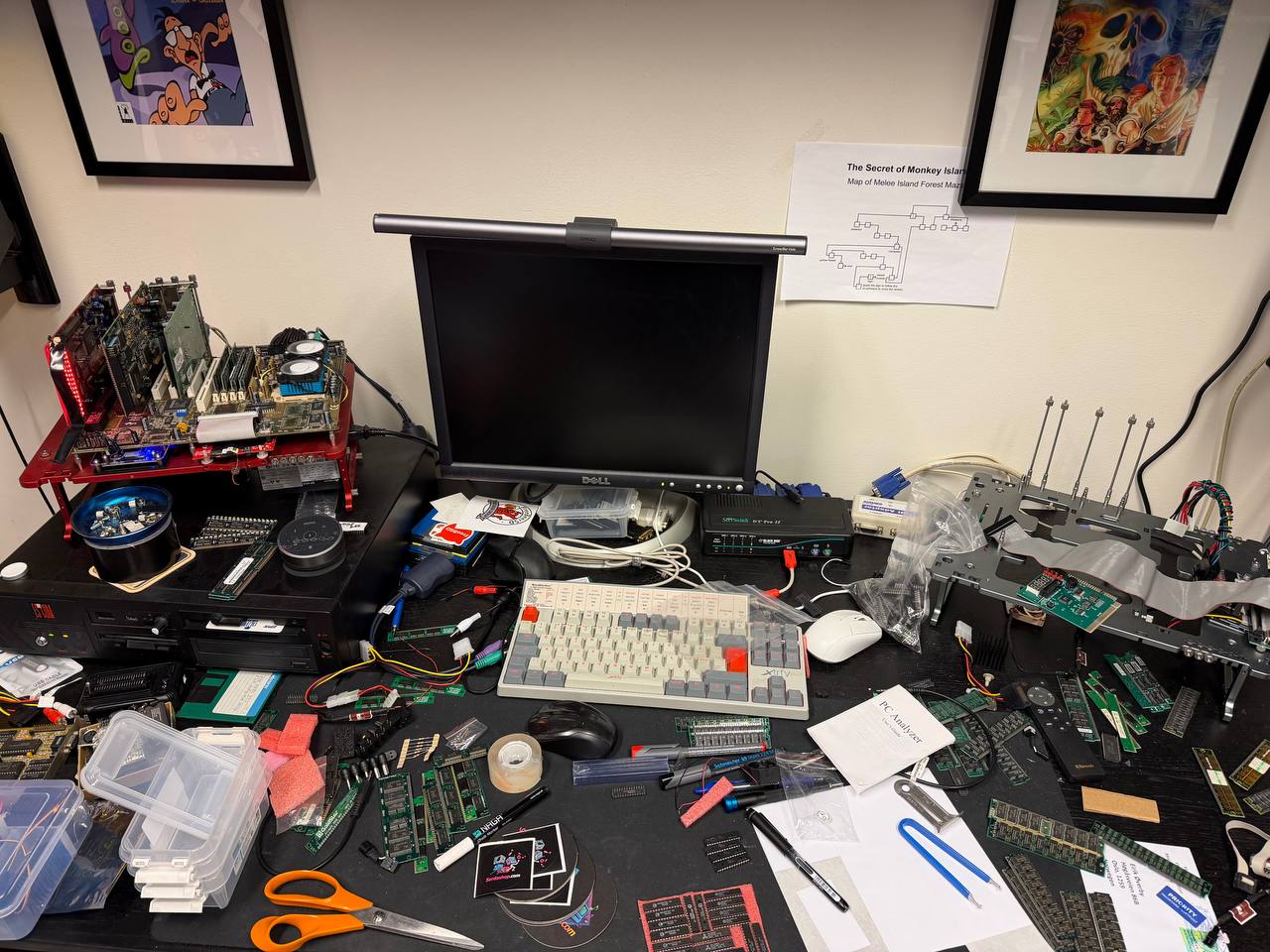
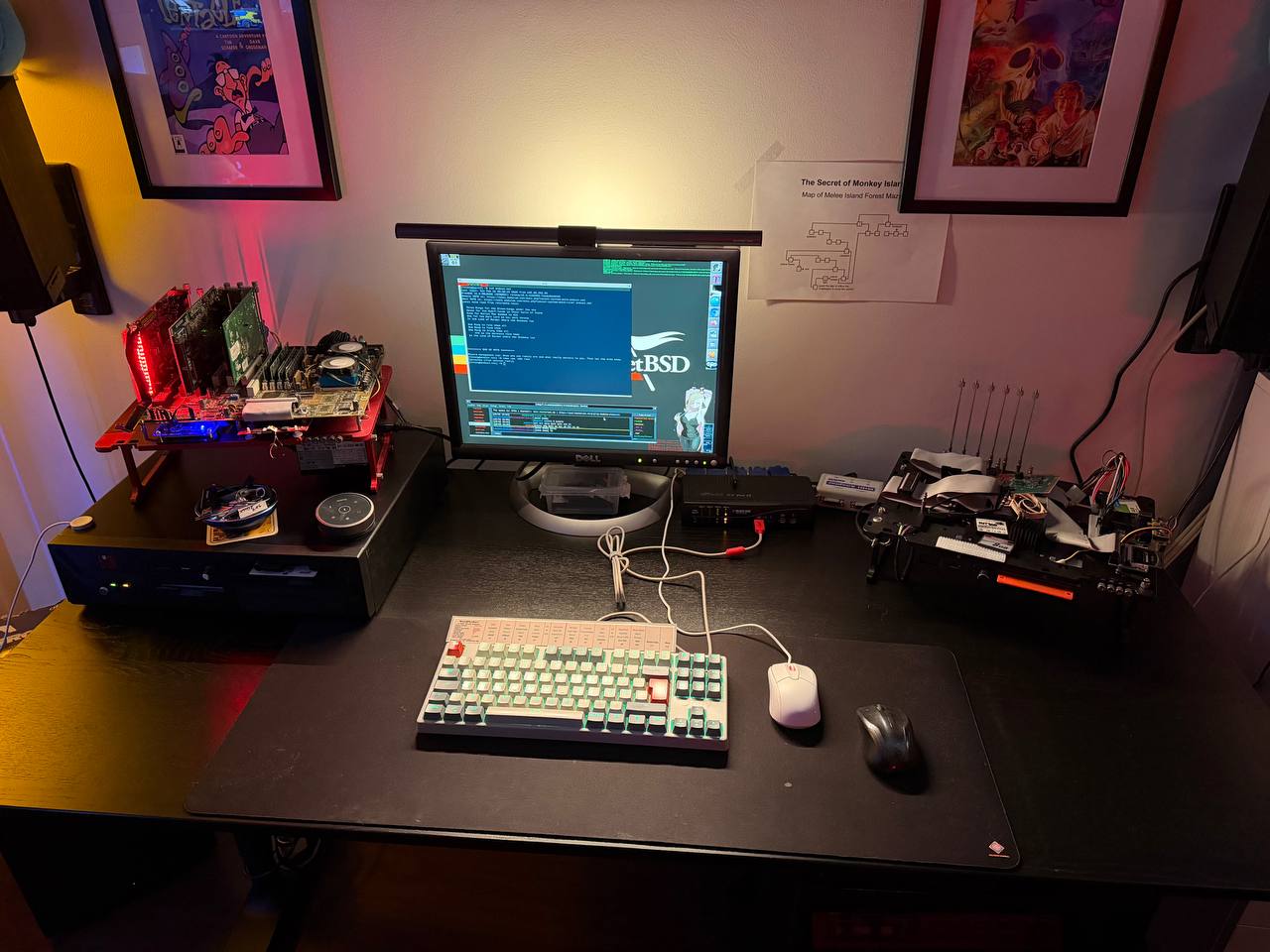
@ltning your before looks like what my after might be
Great job!
@ltning good boy 😎
@semanticfire @ltning Clean desk policy compliance achieved.
Mhhh.. #snac crashes when it start's in my Dual Pentium II system. It's performing at start a heavy job "started deferred data integrity check", which does lot IO.
When I turn off the traffic from outside, it seems to run (takes ages). But when I turn on the traffic to it, it crashes with
`Illegal instruction (core dumped)`
I took the installation over from the PIII system and activated the MP #OpenBSD kernel. (Do you really have to cp it from the CD by yourself??)
@DeltaLima
Recent versions of OpenBSD automatically install the right kernel. Are you running a fairly recent version?
@FritzAdalis 7.8 downloaded the iso two weeks ago.
I took the SSD over from an P III single core system, where I installed it. I thought OpenBSD should be capable as well to get swapped around similar hardware.
@DeltaLima
Usually it can. I'm not sure of the technical reasons for having single vs. multi processor kernels any more, but they should at least boot.
(I guess I read what you wrote backwards from what you meant.)
@FritzAdalis I've tried the "normal" bsd kernel without mp support again, and it crashes there too :/
Looks like I have to do some more debugging.
@DeltaLima
Yeah, it shouldn't crash. Maybe try ktrace/kdump on it and see where it dies, or gdb on the core file if you know how to use it. (I do not.)
@FritzAdalis I tried ktrace+kdump but didnt get something out of it. At the end, it gets a SIGILL, after trying to read a json file. I then did a dump with tracing all childs and saw it seemed to read a lot of certificates - so I assume it's doing some SSL stuff and fails there (?) 🤷
```
19370 snac PSIG SIGILL SIG_DFL code=ILL_PRVOPC addr=0xa0284f0 trapno=0
19370 snac STRU struct stat { dev=10, ino=2728365, mode=-rw-r----- , nlink=2, uid=1001<"snac">, gid=0<"wheel">, rdev=109...
```
@DeltaLima
Ssl... I wonder if it's expecting the cpu to have an instruction that didn't exist then.
@FritzAdalis Idk - @ltning is running two servers on similar machines, one with AMD 5x86 and one with dual Pentium on NetBSD. He's also running a patched version, but from what I understood (C programming noob) there was nothing directly ssl related in those commits.
I'll try this fork next just for fun.
@ltning @DeltaLima
The man pages say sigill is 'illegal instruction' which is why I thought of the sse/simd additions. It could just be trying to execute garbage though.
@ltning @FritzAdalis Yes I'm building it as described in the README.md . Yea SSE could be an interesting reason for that. But the rest of the system works just fine with all the ssl stuff (curl https://, ssh, ..)
I am really new to BSD world, ktrace looks kinda familiar, but I havent got really into it yet. I uploaded a bit more context to it if youre interested: https://privatebin.net/?e08420adeed29c66#42FxjSdb2KYqUyhNFEGW7Ty1rC3XoxgDPjvNMYb7RAo4
@DeltaLima @ltning
Hm, Pentium and 5x86 wouldn't have any instructions that a PII doesn't. Could be something that was ripped out of libressl but netbsd is I think still on openssl. Or I'm completely off base and it's just a regular bug.
@ltning @DeltaLima
OpenBSD source will always output the same code independent of the current cpu capabilities, but other code may not.
@FritzAdalis @ltning I think I'll try NetBSD next as troubleshooting step, hope I will find time at the weekend for it. Thank you so far! :)
You may want to make sure you disable encrypted swap unless you have a ton of RAM. Someone seems to think that if you're on x86 you always have CPU to spare for encryption :D
Also, pkgin is fantastic and many (more than on OpenBSD) packages are built so they work on even an i486.
@ltning no, I built it new from scratch. I also reinstalled the whole system today to ensure everything is fine.
ISA performance can be "as good as it gets" on a PCI machine, and most BIOSes will allow you to configure it to a point that it can easily saturate the bus and even break stuff - just like in the good old days. Wait states and bus speed tuning being the most important things.
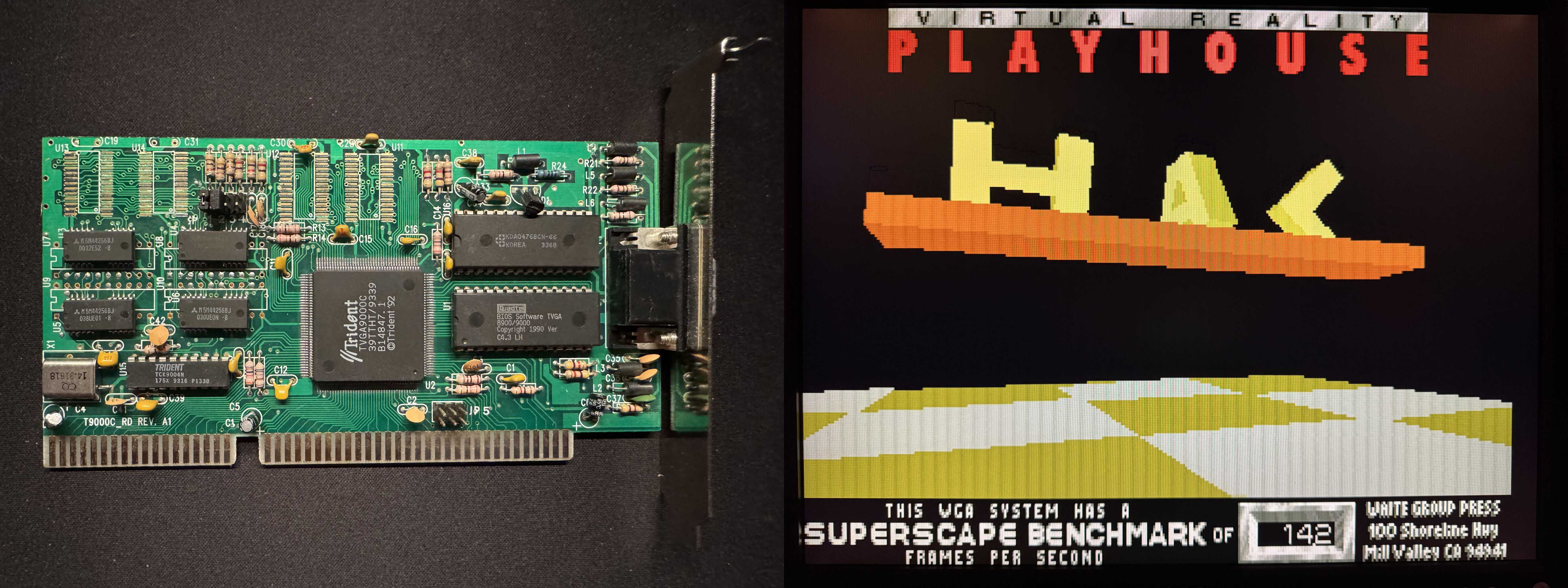
I also know that Tridents are not all garbage, but it is fair to say that the 9000-series (which is essentially a 8900C with some additional integration) isn't going to win any performance prizes no matter what machine you put it in. The 8900D on the other hand is quite impressive in DOS, keeping up with all but a small handful of much more expensive cards. It is, of course, useless for a GUI system since it has no acceleration functions, but for plain VGA it's pretty good.
The reason is, of course, that the Matrox is made for GUI applications. And in those, compared to its peers, it absolutely shines according to reviews at the time. I'm looking forward to testing it in a GUI environment, and I'll surely post about that somewhere as well. And I'll use more period-correct hardware, I promise! :)

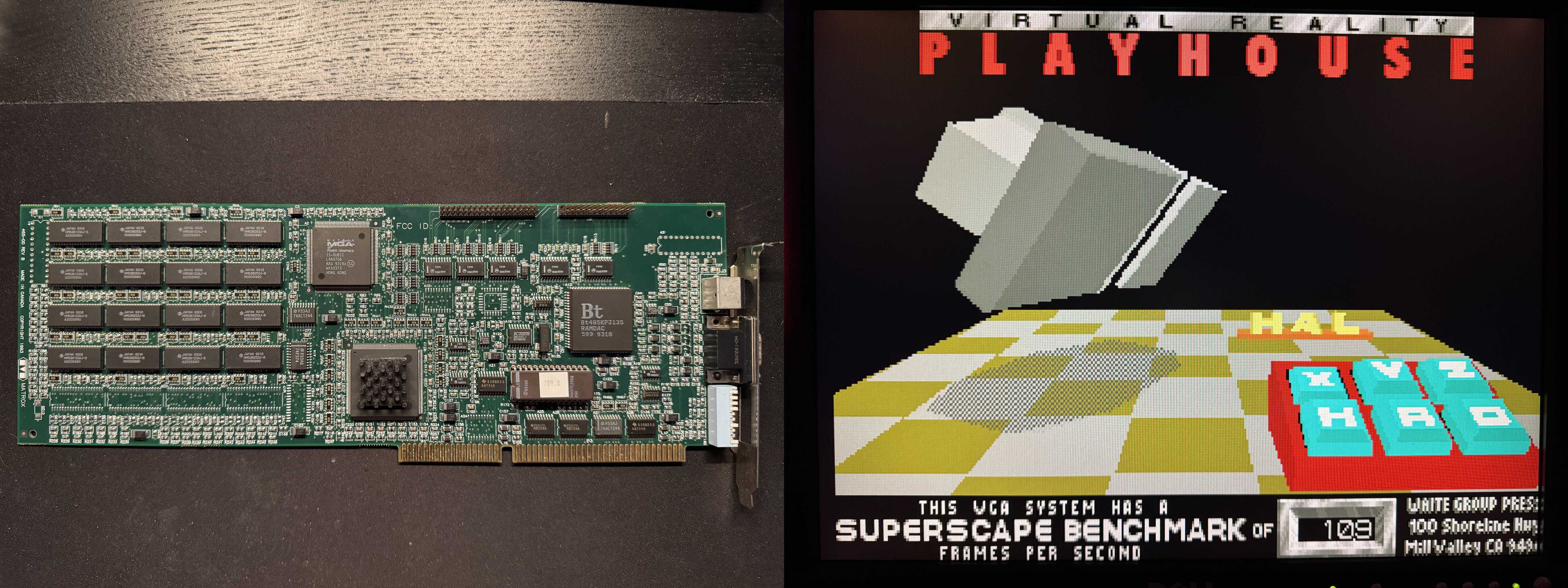
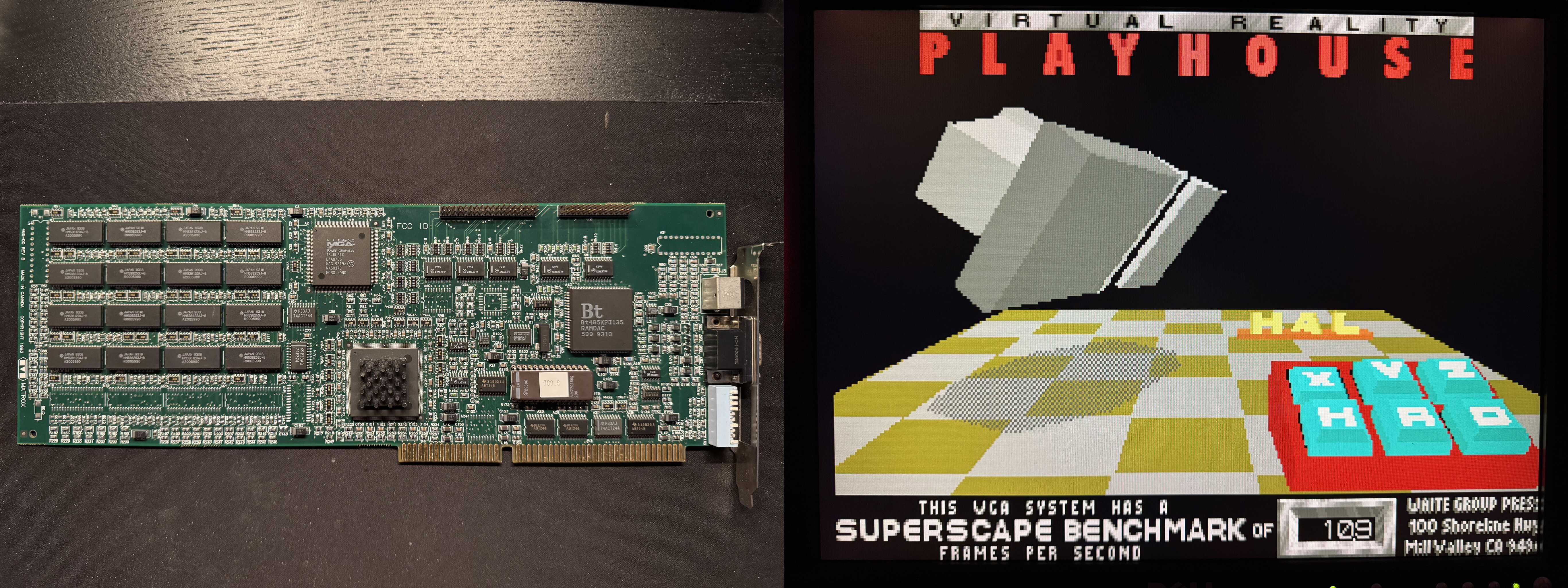
I recently built an original Pentium 60MHz system, built on an ECS motherboard. Around the same time I received a "mystery" VGA card: A Matrox MGA Impression ISA card. And since most of my builds are "open builds" and therefore easily accessible, that machine got the pleasure of becoming the test bench for the Matrox.
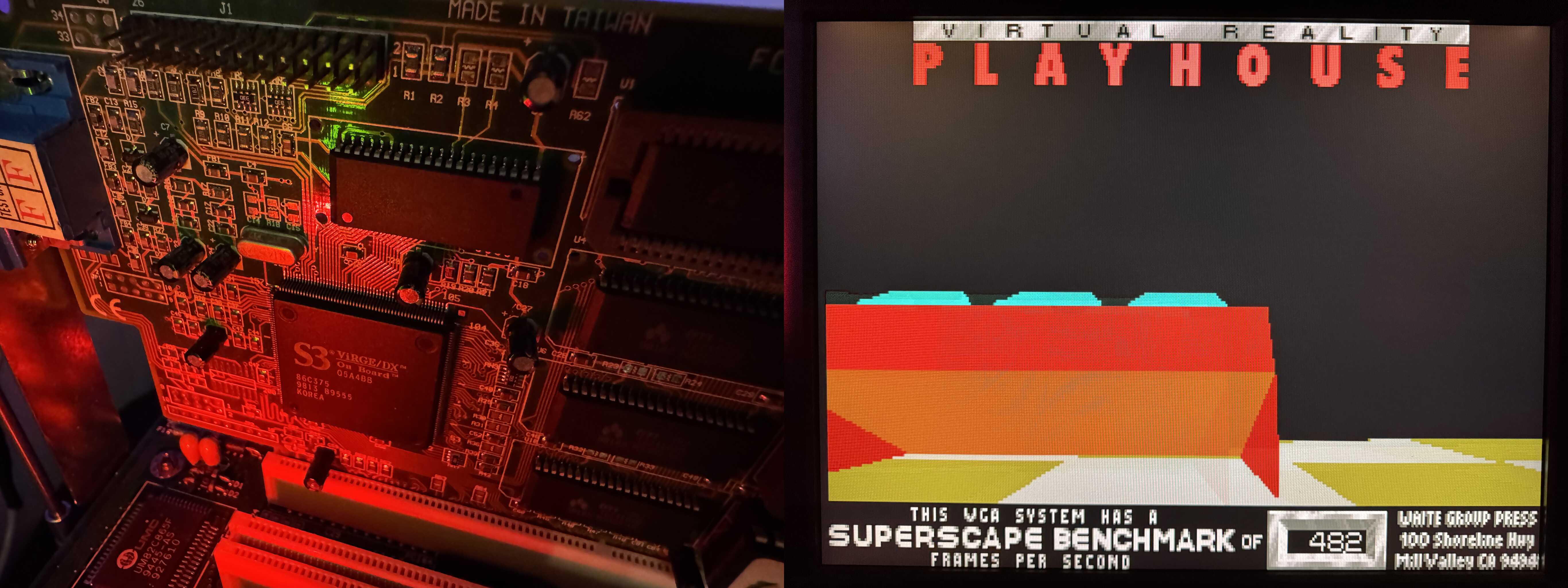
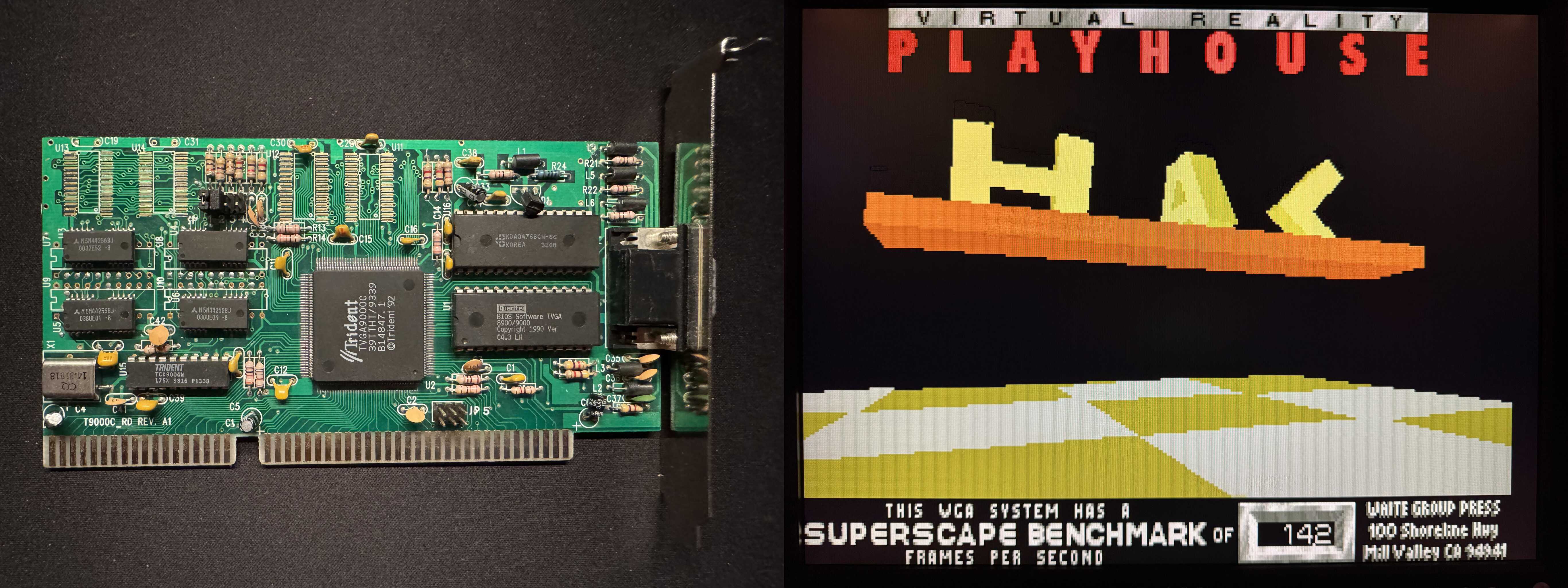
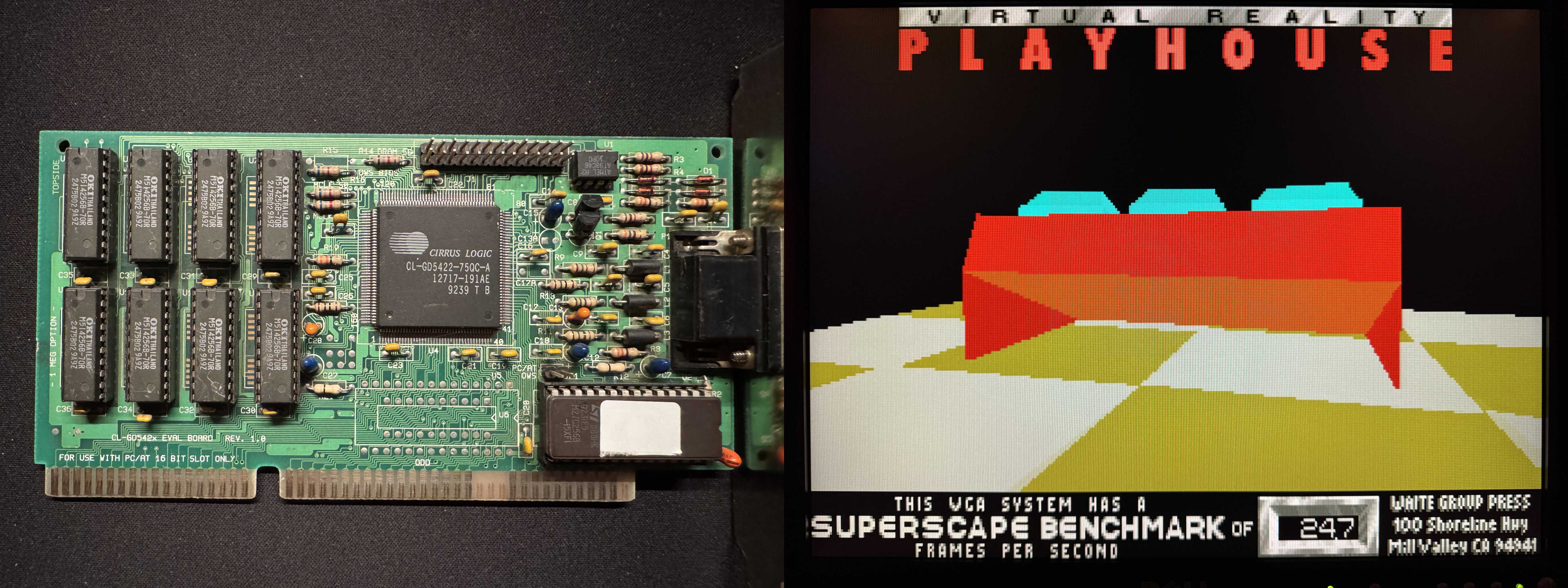
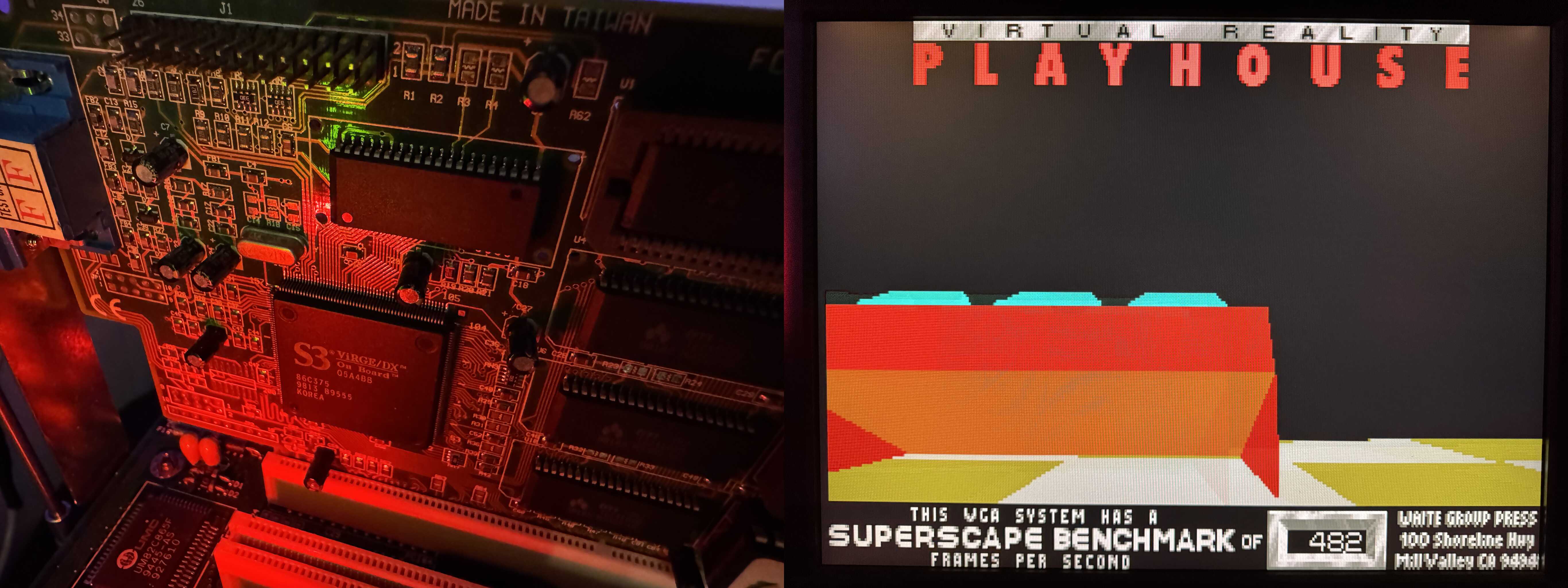
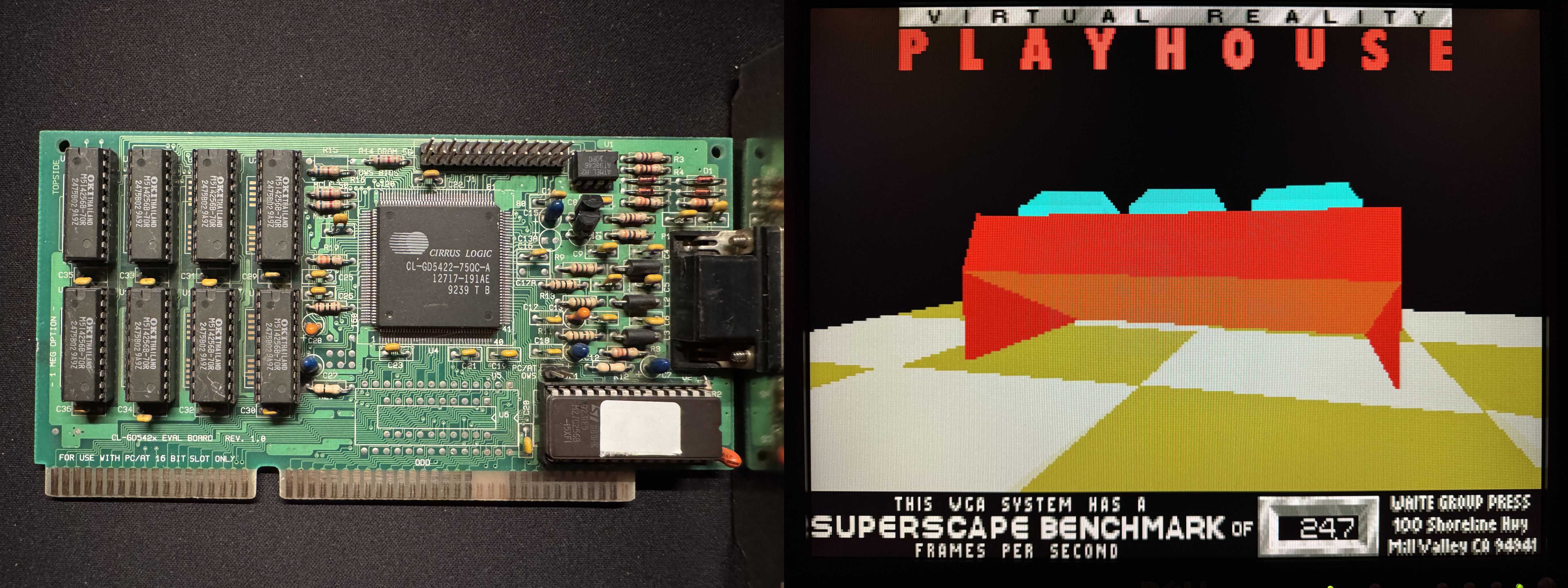
As already revealed, the Matrox performs atrociously bad. So bad, in fact, that I had to test a couple other ISA cards to make sure it wasn't a system issue. I used my go-to benchmarking tool #3DBench from Phil's DOS Benchmark Pack. I really don't want to experience Doom with this card..
And without further ado, the contestants and their results in this spur-of-the-moment benchmark run:
- Baseline: A 32-bit PCI S3 Virge/DX based card with 4MB RAM: A perfectly workable 48.2
- The low-end Trident TVGA9000C with 512KB RAM (this is a real garbage card): A pretty shitty 14.2
- The mid-range Cirrus Logic CL-GD-5422 with 1MB RAM (this is a decent card, known for compatibility but not necessarily speed): A barely bearable 24.7
- And finally, the "star" of the show, the Matrox: A whopping 10.9!
I said it was atrocious, didn't I? But hey, I'm gonna use this one with #OS2 anyway, so who cares about DOS performance, right? ;)
I recently built an original Pentium 60MHz system, built on an ECS motherboard. Around the same time I received a "mystery" VGA card: A Matrox MGA Impression ISA card. And since most of my builds are "open builds" and therefore easily accessible, that machine got the pleasure of becoming the test bench for the Matrox.
As already revealed, the Matrox performs atrociously bad. So bad, in fact, that I had to test a couple other ISA cards to make sure it wasn't a system issue. I used my go-to benchmarking tool #3DBench from Phil's DOS Benchmark Pack. I really don't want to experience Doom with this card..
And without further ado, the contestants and their results in this spur-of-the-moment benchmark run:
- Baseline: A 32-bit PCI S3 Virge/DX based card with 4MB RAM: A perfectly workable 48.2
- The low-end Trident TVGA9000C with 512KB RAM (this is a real garbage card): A pretty shitty 14.2
- The mid-range Cirrus Logic CL-GD-5422 with 1MB RAM (this is a decent card, know for compatibility but not necessarily speed): A barely bearable 24.7
- And finally, the "star" of the show, the Matrox: A whopping 10.9!
I said it was atrocious, didn't I? But hey, I'm gonna use this one with #OS2 anyway, so who cares about DOS performance, right? ;)
Also, testing hashtags on snac ;)
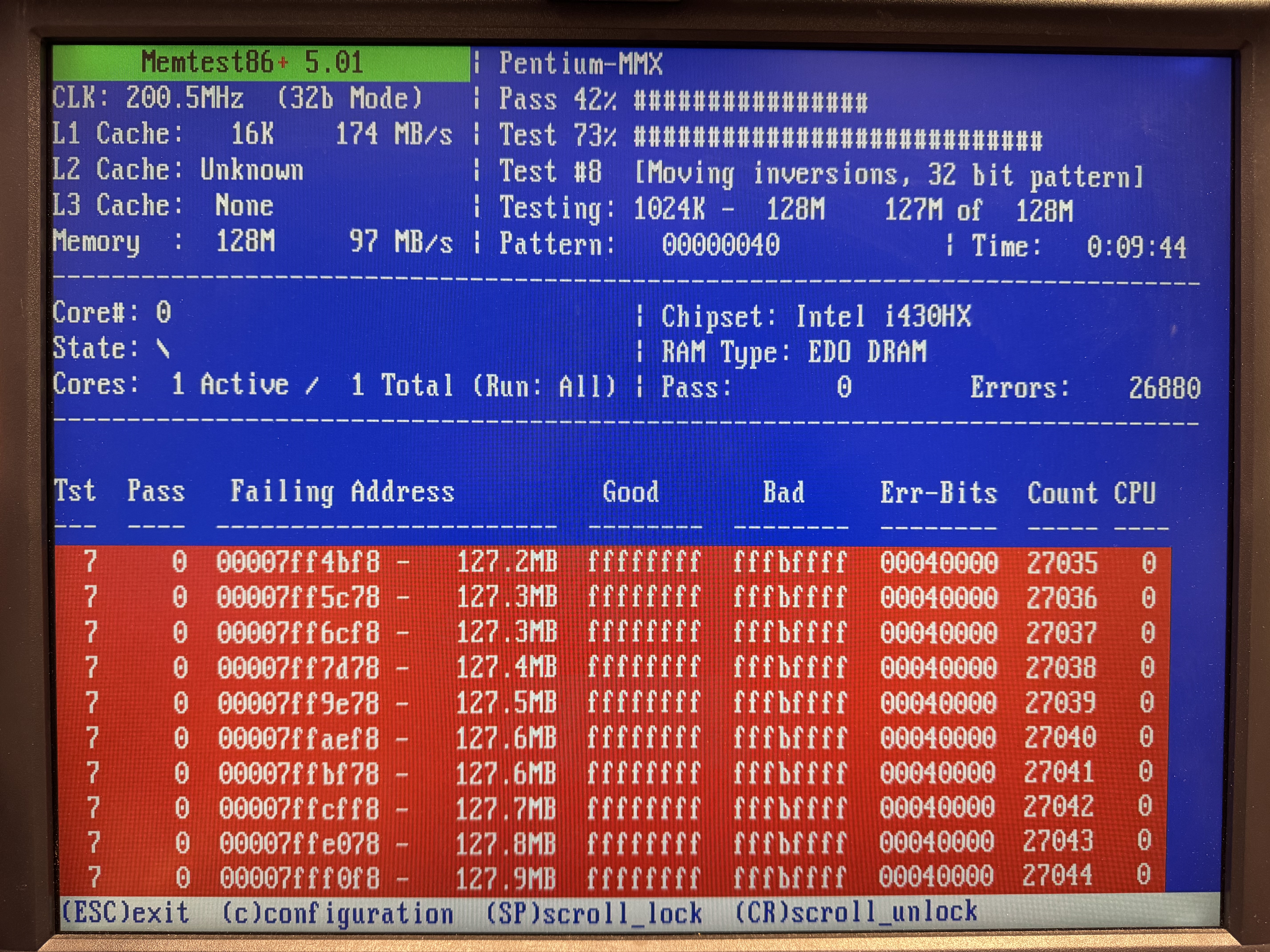
#OS2 #WarpServer #Memtest
The contenders: QuickView Pro version (dvpro), Digital Sound System 3.1 (dss) and MPXPlay 1.67 (mpx). The file: Astral Projection's "Bizarre Contact" from the album "Ten".
Enjoy these clips :D
I mean yeah, great, I get a proper BSD-4.4, 32-bit TCP/IP stack and tools. But it's taken me half a day. Getting the installation files over involved loading packet drivers and using #mTCP in a DOS session. Which works .. surprisingly well. But still .. FixPak43, reboot. MPTS, reboot. Netscape 2.02, reboot. Java 1.18, reboot. Feature Installer plug-in (no reboot). Then, finally, TCP/IP.
All this to have a machine to play with at #Blackvalley.
#OS2 #Retrocomputing #WhyAreYouReadingThis #GoDoSomethingUseful
Only when a post is boosted or replied to do I run the risk of my hot-babe CPU monitor turning nsfw. So better keep it boring, I guess.
And if it wasn't for crypto being too slow to actually work I'd be doing the same on the 386SX-class machine that I also have running NetBSD. But with a hyper-optimized SSH handshake taking over a minute, I have no hopes for 2k RSA signatures or any kind of TLS handshakes with remote instances happening in anywhere near the timeframe they would need to..
History